The project
The coupling of energy systems requires careful planning
The aim of decarbonising the French economy relies largely on the large-scale integration of renewable energy and the electrification of end-uses (transport, industrial processes, etc.). This entails strengthening sectoral coupling (electricity, methane, hydrogen, heat, mobility).
If this coupling is well organised, it can reveal significant sources of flexibility, which become central to the operation of the electricity system. Conversely, if stakeholders are poorly coordinated, managing the electricity system can become more challenging.
Sectoral coupling must therefore be carefully planned, requiring:
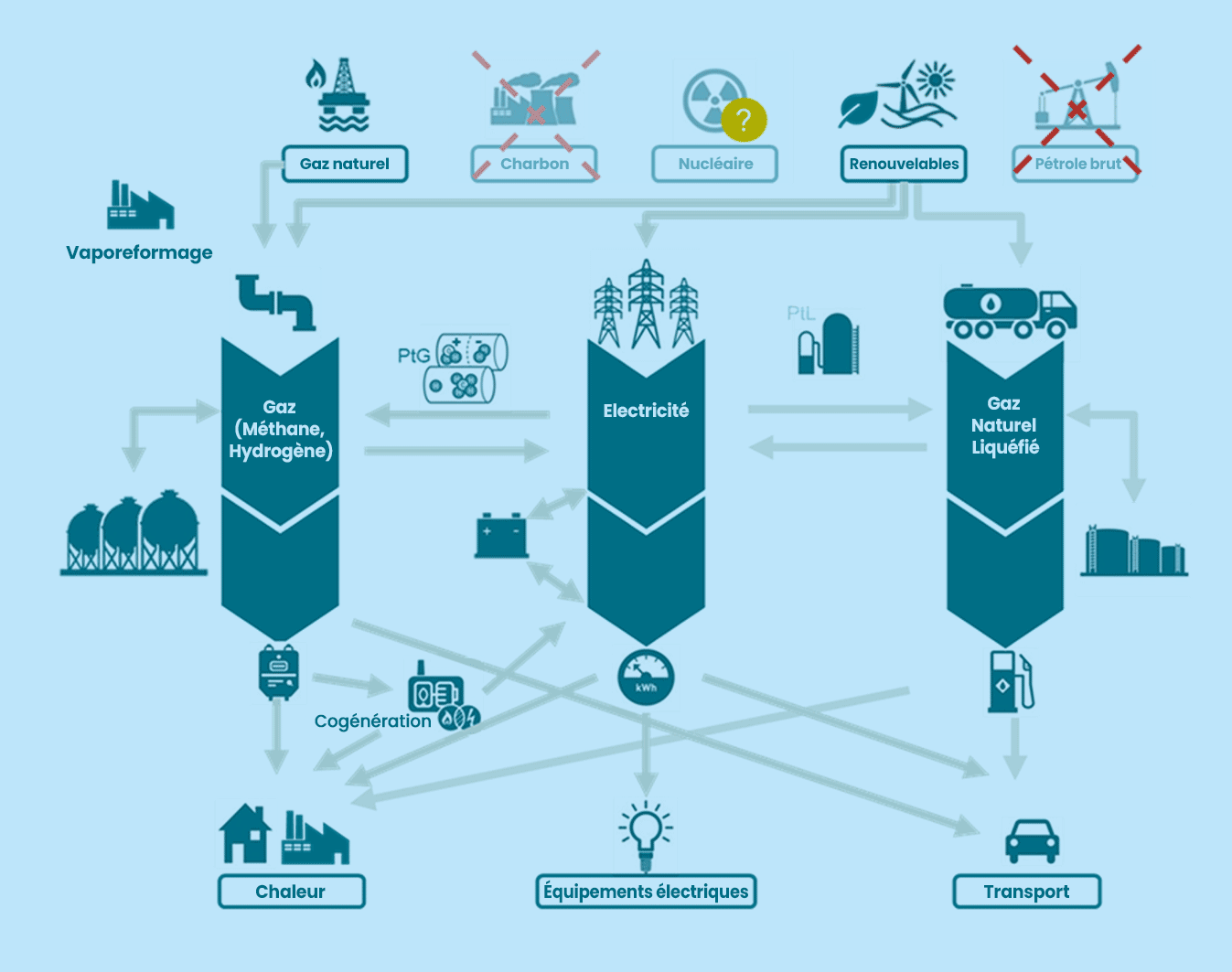
The vectors involved in sectoral coupling
(source: Frontier Economics)

PlaneTerr’s ambition
The project has three complementary objectives:
1
Develop or enhance the modelling of specific components with potential for flexibility and coupling within multi-energy systems.
This modelling covers electric vehicle charging, industrial heat production and associated thermal storage, gas pipeline storage, electrolyser water consumption, multi-energy consumption in residential complexes, long-term storage, and reserve mechanisms.
2
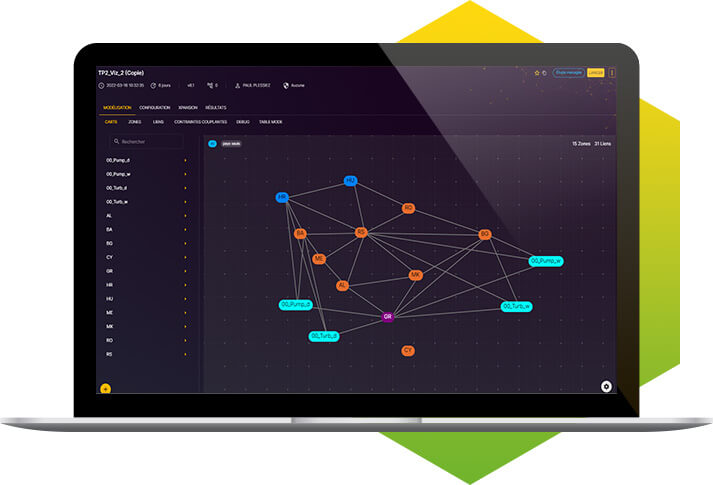
Integrate these new models into a simulation and planning tool for multi-energy systems, covering all energy vectors, with open access, modularity, and the ability to couple operation and investment.

3
Demonstrate the flexibility capabilities of the modelled components through simulations of present and future energy systems, as well as multi-energy planning studies.
The specific studies validate the accurate modelling of components by the simulation tool. They focus on:
- the conditions for the emergence of thermal storage with TTE,
- hydrogen production systems with Air Liquide,
- gas pipeline storage or the CO₂ chain with GRTgaz.
The planning studies aim to determine a system’s flexibility capabilities, identify the conditions for implementing sectoral coupling, and highlight the associated challenges.


Resources and project planning
The project began in September 2023 and will run for four years.
Its budget amounts to approximately €11.5 million and will require around 15 full-time personnel, including four doctoral theses supervised by the PERSEE centre at MINES Paris PSL.

France 2030 support
The development work on the tool, the studies, and the thermal storage demonstrator are co-financed by the Government under the France 2030 plan, administered by ADEME.